
Archives For August 2011

Blanchard colleague Dr. Vicki Halsey recently shared insights from her new book, Brilliance by Design. Vicki is Blanchard’s VP of Applied Learning. There are few people on the planet who know more about how adults learn and how we inspire learning (and learners)!

The book is a great resource for instructional designers and meeting planners. And, leaders and managers benefit greatly from the insights, models, and tools presented.

Great Leaders Inspire Learning

Great leaders know that skill sets – theirs and team members’ – must evolve constantly in order to stay relevant, productive, and creative in our fast-paced world. They know that skill sets can “ferment” over time, and lose the ability to deliver needed performance.

Good leaders promote ongoing learning; GREAT leaders inspire ongoing learning. Great leaders are effective teachers – or are able to secure effective teachers if the skill set is new to them – to build skills day in and day out.

Great leaders help team members be smart. Vicki’s ENGAGE model serves leaders very well by mapping out proven, effective strategies for building needed skills in others.

The ENGAGE Model

We know learning happens best over time. Event-based sessions can build awareness, but skill building evolves as learners gain competence and confidence through practice and application. Brilliance by Design helps teachers get their content into a form that is enthusiastically embraced by learners. The ENGAGE model is a sequential approach to building an effective learning experience over time. It effectively evolves information and knowledge into applicable skills.

E – Energize Learners: Energizing learners starts well before the formal “teaching” moments. This step helps the leader build curiosity and clarity about what the skills being taught will enable learners to do differently, better, more efficiently. Pre-session activities could include learners reading relevant articles, viewing a welcome video, and hearing testimonials from previous learners. In-session activities could include getting people talking early, asking challenging questions, and listening – then posting key insights to validate learners’ perspectives.

N – Navigate Content: This step provides a framework for teaching. First, focus learners on the target or outcome. Then help them experience and label the new information. Next, drill down and embed key concepts through interaction. Lastly, practice applying the concepts and check for understanding.

G – Generate Meaning: This step is an interlude, a pause, to ask learners to reflect on what they’ve learned and consider the importance or meaning of that learning in their lives (professional and personal). With this process, you increase the likelihood of change, of them embracing new skills.

A – Apply to Real World: In many learning sessions, learners distance themselves from true application by describing how they’ll apply the new skills. This step requires that learners demonstrate the new skills, in real time, in a supportive environment with guiding feedback.

G – Gauge and Celebrate: This phase requires you to help the learner assess their progress towards skill mastery – and celebrate learnings and progress towards mastery. Vicki presents a variety of great tools for assessment and celebration. The key here is to build both demonstrated competence and inspired confidence so new skills are utilized quickly.

E – Extend Learning to Action: Learning does not end with the teaching session. Ken Blanchard says leaders and organization’s must spend TEN TIMES the time and energy reinforcing learning as teaching it. Mechanisms like skill buddies, email reminders, coaching, lunch & learns, podcasts, etc. create clarity about what applying the new skill looks like and what success with those skills looks like.

All leaders need to utilize the proven practices in Brilliance by Design.

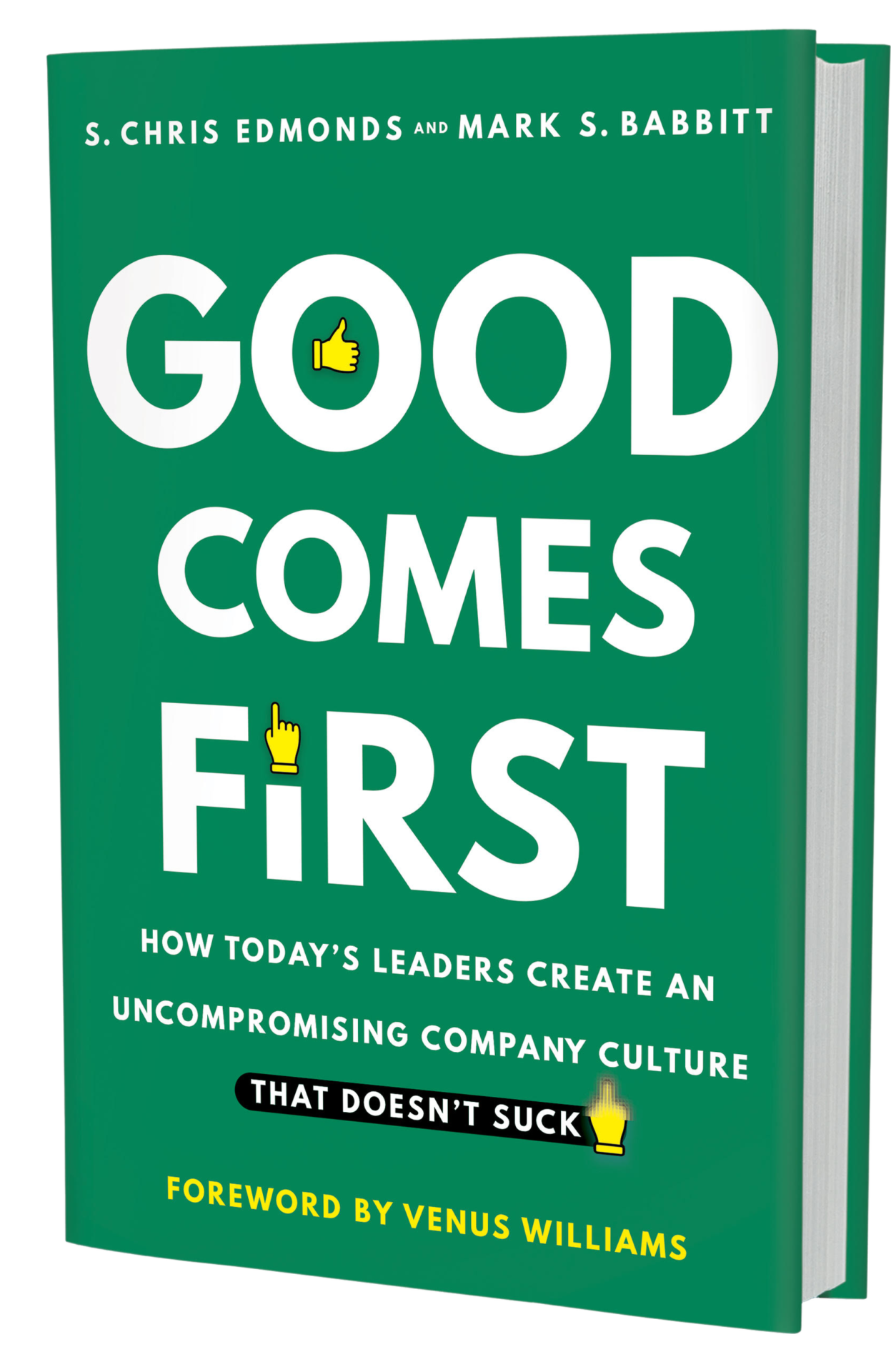
Download your FREE excerpt of my new book, #CORPORATE CULTURE tweet.

On this morning’s walk with Shady, the Wonder Dog, we two enjoyed watching riders on the Deer Creek Challenge 106-mile bicycle ride. The route took cyclists right past our mountain abode and through our rustic wooded neighborhood. Riders cruised downhill at nearly 45MPH top speeds, negotiating sharp mountain curves as they go.

What made the experience a bit unnerving for us (and likely for the riders) was a recent story in the Denver Post about bike race sabotage. On the morning of the Breckenridge Epic bike race, unknown folks switched signs and route markers to intentionally set riders off course. In addition, Colorado authorities warned cyclists that tacks, box cutters, and broken glass have been found on roads that are hosting rides this coming week, including the inaugural USA Pro Cycling Challenge.

Similar “tack attacks” aimed at stopping bicycle races – or intentionally harming riders – occur too often; one happened in Maryland, USA last year and another in Scotland in 2009. Tensions between bicyclists and motorists – angry at road closures and congestion – are seen as the primary cause of these attacks.

I view the world through a consultant’s eyes; I look at effects (the current reality) and attempt to understand their root cause (the beliefs or mindset that created the effects). I don’t think I can solve the the bicycle race “tack attacks” issue in this post, so let’s look at “tack attacks” in your workplace.

“Tack Attacks” in Your Workplace

Skilled teams that work cooperatively – even under pressure – are teams that exceed standards, that creatively solve problems, and that enjoy working together to reach higher performance.

When team members behavior inhibit the ability of others to meet deadlines, to meet quality standards, to “WOW” customers, then you’ve got “tack attacks” going on. If a team member misses a commitment that causes the team to miss commitments, they all look bad and the “buzz” about the team gets negative (or more negative).

What is the root cause of workplace “tack attacks”? What tensions exist between team members? Causes are as wide-ranging as the number of wildflowers in a Colorado springtime mountain meadow. If a team doesn’t learn how to manage diverse skills, needs, personalities, and opinions, it will never reach it’s performance potential.

Strong leadership can help team members cooperate, create, and contribute. Leaders must map out the rules and the route for the team, including:

  • Vision – where we’re going as a team; what our future will look like when we work together
  • Values – what principles we hold dear; what norms we will adhere to, ensuring cooperative interaction
  • Strategies – what opportunities exist in our marketplace with our customers and how we’ll leverage those opportunities
  • Goals – what specific metrics and targets we set to enable us to make our vision a reality while living our values

Recent talent research highlights the need for strong leadership. Aon Hewitt’s 2011 Talent Survey was released in May 2011. Highlights include:

  • 56% of respondents believe that leaders play a vital role in meeting business goals; only 12% rated their leaders as extremely effective.
  • 56% agree that a leader’s involvement is essential in meeting profitability targets; only 14% believe their leaders are extremely effective in doing so.
  • 56% felt their leader’s involvement was necessary in delivering service, but only 17% felt they were extremely effective.
  • 44% agreed that their leaders play a vital role in retaining talent, but only 7% believe they are extremely effective at it.

What are you doing TODAY to increase your team members’ demonstrated cooperative interaction? Let us know your thoughts in the comments section below.

Have you downloaded your FREE excerpt of my new book, #CORPORATE CULTURE tweet?

In a recent coaching call, one of my culture clients (a senior executive of a major retailer) described his upcoming meeting with the CEO of his organization. “I’m going to ask him whether he thinks we are a power-driven company, a profit-driven company, or a purpose-driven company,” Joel said. I’d not heard about those differentiators, so I asked Joel to define them for me.

I learned that organizations are not exclusively driven by a single one of these approaches. And, their primary drivers are not that difficult to diagnose. An organization’s plans, decisions, and actions, Joel explained, provide very clear indicators of their core interests and drivers.

A company that is primarily power-driven seeks to be a standard-setter, a “big player” in their industry that others must work with to gain a foothold in their marketplace. A power-driven organization certainly seeks to make profits, but their primary actions are designed to increase their influence, their market share, their breadth. The power-driven organization’s behavior can be seen as self-serving and arrogant.

Based on these criteria, I see Microsoft as primarily a power-driven company. (Full disclosure: I’m running Microsoft Windows 7 on my desktop and Microsoft Office 2011 on my Mac; I’m as culpable as any other Microsoft product user for helping them extend their power.)

A company that is primarily profit-driven seeks to create organizational wealth, first and foremost. It analyzes potential products, services, and markets carefully to identify the most profitable avenues, then pursues those avenues for as long as the profits meet expectations. The profit-driven organization’s behavior can be seen as self-serving and manipulative. Such organizations have been known to take advantage of existing rules and/or laws to create profits.

Based on these criteria, I see pharmaceutical companies as primarily profit-driven. (Full disclosure: I’m a big believer in Western medicine. I take prescription medications daily to keep my heart healthy and my knees working smoothly.)

A company that is primarily purpose-driven seeks to engage employees and customers in helping the organization’s service vision to become a reality. These companies often promote social responsibility and demonstrate service to their communities regularly. In purpose-driven organizations, employees typically are very vocal about their organization’s purpose and community benefit. Certainly, purpose-driven companies must be profitable in order to continue their good works; profits serve purpose, rather than being the primary desired outcome.

Last year, socialbrite.org celebrated four terrific examples of corporate social responsibility. Based on these criteria, I believe that Newman’s Own, the late Paul Newman’s charitable organization, is a purpose-driven company (they’ve given over $300 million to charitable causes since 1982). (Full disclosure: I LOVE Newman’s Own products, particularly their black bean & corn salsa. Amazing quality & taste, and I’m helping community organizations every time I inhale a jar of it.)

The Rest of the Story

I connected with Joel after his CEO meeting. Joel said the conversation was a rich one. “He thinks we’re a profit-driven company that wants to be a purpose-driven company,” Joel related. “I like that – it means we’re not ‘done,’ that we can evolve to the kind of purpose-driven company I think we can be.”

I’m optimistic, as well. Creating a purpose-driven company is more art than science, pulling together key pieces that make a cohesive, vibrant whole. Joel has the heart, skills, and commitment to help his organization evolve.

Where does YOUR company stand? Is it primarily power-, profit-, or purpose-driven? Let us know your thoughts in the comments section below.

Have you downloaded your FREE excerpt of my new book, #CORPORATE CULTURE tweet?

A Facebook post by dear friend & mentor, Becky Robinson, caught my eye this week. Her post said: “My girls haven’t colored much this summer. Yesterday, I bought a new box of crayons. They’ve been coloring nonstop. If I had known that was all it would take, I would have bought them a new box of crayons sooner.”

What a fabulous picture Becky paints! I can just see her girls, at the kitchen table, coloring up a storm – some inside the lines (and some not)! AND the vital idea Becky raises is a critical one for leaders to consider. Her girls didn’t miss coloring this summer until the crayons were RIGHT IN FRONT OF THEM. Leaders, you pay attention to what’s RIGHT IN FRONT OF YOU. Lesson: Always put the right stuff in front of you.

What Do You Pay Attention To?

In my work with senior leaders and executive teams across a wide variety of industries, one of the most important questions I ask is to learn what those leaders pay attention to. Most of them tell me that they spend most of their time looking at performance indicators – usually in the form of summaries of key metrics, sometimes from spreadsheets, sometimes from other dashboard tools.

Monitoring performance metrics is a GOOD THING. Yet sometimes internal systems present metrics that are EASY for us to monitor but aren’t the RIGHT things for us to monitor.

Here’s an example. A few years ago a printing plant client installed a new $20M high-technology press which could deliver speeds of 50,000 impressions an hour. The dashboard built into the press software kept careful track of impressions per hour.

However, if the color scheme was off by just 2%, the printed matter would not meet their customer’s standards. The press’ dashboard did not monitor color requirements perfectly – only a human could do that.

A run of one million pages/impressions wasn’t uncommon. Every job was easy to monitor with the dashboard metrics. Systems and incentives were created to meet a certain target of  average impressions per hour. Yet if the color balance was off, the job would have to be run again (creating waste and higher costs for the job)! It was vital to monitor – and incent – both impressions per hour AND adherence to the customer’s color palette.

You can see that what is EASY to measure might not give you an accurate full picture of reality.

Here’s What Leaders Must Pay Attention To

  • Strategic Clarity – leaders must constantly assess how well their organization’s strategy is understood across operations staff. Communication and reinforcement of the declared strategy will lead to clear understanding by all staff.
  • Goal Alignment – Once strategic clarity is reached, leaders must constantly assess the degree to which projects, goals, tasks are aligned to your organization’s declared strategy.
  • Expectations Clarity – Next, leaders must ensure that everyone in the organization has formalized ends goals (performance standards) and means goals (values defined in behavioral terms). In addition, leaders must ensure that all staff proactively commit to their performance and values goals.
  • Consistent Accountability – leaders must hold all staff accountable, day in and day out, for meeting performance expectations and values expectations. Accountability means the prompt application of POSITIVE consequences (when folks do the right things the right way) and NEGATIVE consequences (when they don’t).

Change Your Habits

Every leader can improve their team’s performance and their values-alignment by changing what they pay attention to. Leaders, please let us know how your team responds to your new focus in the comments section below.

Have you downloaded your FREE excerpt of my new book, #CORPORATE CULTURE tweet?

In Blanchard’s work with culture clients, a key part of a successful culture initiative is the transition of the senior leader from a self-serving leader to a servant leader. Self-serving leadership is, unfortunately, a very strongly modeled approach to influencing others in Western society. Servant leadership is gaining strength – and high-performance, values-aligned cultures require it from their senior leaders.

In my work as a process coach for senior leaders, a clear pattern has emerged. In every single case, senior leaders that embrace servant leadership generate tremendous traction on their desired culture. Those that do not embrace servant leadership enjoy much less benefit to the culture process.

In Blanchard’s Servant Leadership Immersion program for senior leaders, we focus on the practice of servant leadership. We must build the right habits, and there is nothing like discipline to create effective habits.

  • Solitude
    Discipline one requires that you are out of human contact, alone and present, for intentional, lengthy periods of time. Silence of mind and spirit is an essential component of solitude. Therefore, during time of solitude, no talking, no writing, no doing.
    This is a difficult discipline to embrace in our fast-paced society. Yet quieting the mind and spirit, reflecting in the moment, recharges, clarifies, and enables us.
  • Rest
    Discipline two is about getting enough rest, enough sleep, to be able to be present to the opportunities for servant leadership that surround us. Sleep deprivation is a huge negative factor today that inhibits good relationships, strong performance, and healthy lifestyles.
  • Structure
    Discipline three is about creating structure to enable clear, proactive communication between you and your direct reports. To serve them well, you must provide the behavior they need, whether it is guidance, “hands-off”-ness, support, encouragement, etc.
    This discipline can work wonders in your personal relationships, too – increasing your servant leadership effectiveness with spouse, children, inspiring friends, etc.
  • Love
    Discipline four is about creating space for and demonstration of genuine acceptance and appreciation for those you work with (and live with and engage with) on a daily basis. Accept who you are, what you’re trying to be (vision & values), and what you do well and not so well. You are OK exactly how you are.Be loving of those around you – catch them doing things right. Be aware of the messaging you provide to others.
    Most workplace messaging is overwhelmingly negative: “You did that wrong.” “That effort just isn’t good enough.” You will create a very positive and powerful dynamic by delivering more accepting and appreciative messages of people’s efforts.Yes, they must perform. And, most staff are doing quite a lot RIGHT. They just never hear about those things – they hear only about those things they’re doing WRONG.
  • Truth
    Discipline five is a very specific and very important “alignment” structure for your efforts to demonstrate authentic servant leadership. Leadership is a lonely role; we can easily slip into convenient rationalizations and blind spots regarding how well we “walk our talk.”
    A small, intimate accountability group – made up of people who are not directly impacted by our leadership actions – can serve as powerful, trusted “truth tellers” to help us understand the true impact of our behaviors and decisions.

These disciplines can help you shift from self-serving leadership behaviors to servant leadership behaviors. The core role of leaders is TO SERVE. Our organizations need foundations of mutual trust and respect. Creating servant leadership habits can change you and your organization for the better.

Have you downloaded your FREE excerpt of my new book, #CORPORATE CULTURE tweet?